
Hantavirus: Symptome, Ansteckungsrisiko, Verlauf und Behandlung
Autor dieses Artikels

Markus Weber
Medizinischer Inhaltsprüfer
Das Hantavirus gehört zu den Infektionen, über die viele Menschen erst dann nachdenken, wenn es eine Meldung in den Nachrichten gibt oder wenn sie selbst mit Mäusekot, Staub in einer Hütte oder einem alten Lagerraum in Kontakt gekommen sind. Die Erkrankung ist selten, kann aber ernst verlaufen. Genau deshalb ist es wichtig, ruhig zu bleiben und die Fakten zu kennen.
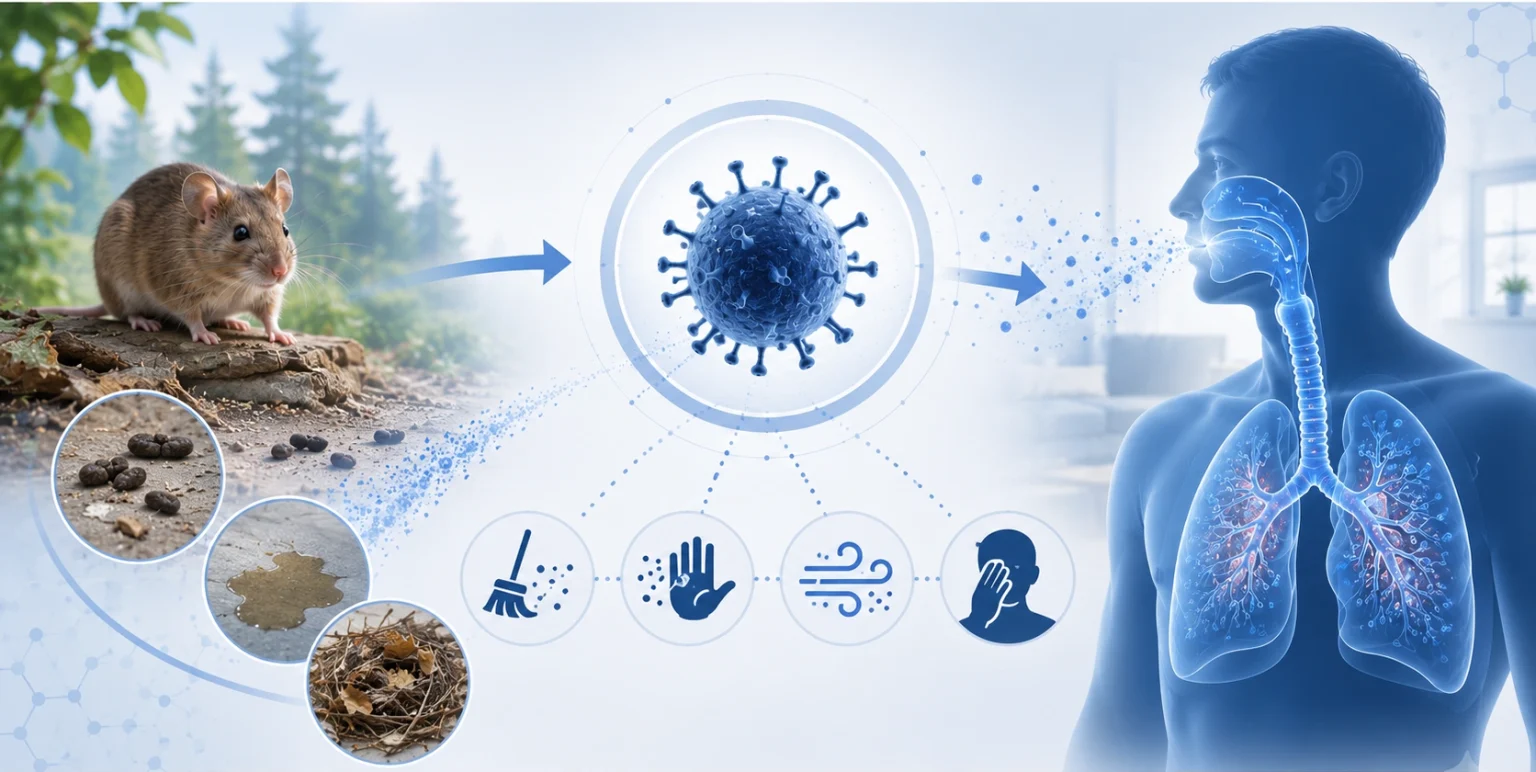
Menschen stecken sich meistens nicht direkt bei anderen Menschen an. Die häufigste Gefahr entsteht dort, wo infizierte Nagetiere gelebt haben. Urin, Kot, Speichel oder Nistmaterial können eintrocknen. Wird dieser Staub beim Kehren, Aufräumen oder Renovieren aufgewirbelt, können winzige Partikel eingeatmet werden.
Viele suchen online nach Hanta virus, weil sie den Begriff aus Medienberichten kennen. Medizinisch wird meist von Hantavirus gesprochen. Gemeint ist eine Gruppe verwandter Viren, die vor allem durch bestimmte Mäuse- und Rattenarten übertragen werden können.
Zuletzt aktualisiert: 21. Mai 2026, 14:00 Uhr
Gemeldete Fälle:
11 nach Ländern ansehenBestätigte Fälle:
9Wahrscheinliche Fälle:
2Gemeldete Todesfälle:
3Diese Zahlen dienen nur der Orientierung und können sich ändern, wenn Gesundheitsbehörden neue Informationen veröffentlichen.
Was ist das Hantavirus?
Das Hantavirus ist kein einzelner Erreger, sondern eine ganze Gruppe von Viren. Verschiedene Hantaviren kommen in verschiedenen Regionen vor und werden von unterschiedlichen Nagetieren getragen. Die Tiere selbst wirken oft gesund, können das Virus aber über Ausscheidungen in die Umgebung abgeben.
Beim Menschen kann eine Infektion unterschiedlich verlaufen. In Europa und Asien stehen häufiger Nierenprobleme im Vordergrund. In Nord-, Mittel- und Südamerika sind einige Virusarten eher mit schweren Lungenerkrankungen verbunden. Der genaue Hantavirus Verlauf hängt also von der Virusart, der aufgenommenen Virusmenge, dem Gesundheitszustand und der Geschwindigkeit der medizinischen Versorgung ab.
Wichtig ist: Nicht jeder Kontakt mit einer Maus führt zu einer Infektion. Das Risiko steigt vor allem dann, wenn Sie trockene, kontaminierte Materialien in geschlossenen Räumen aufwirbeln.
Hantavirus auf einen Blick
Thema | Was Sie wissen sollten |
Hauptquelle | Infizierte Nagetiere, besonders Kot, Urin, Speichel und Nistmaterial |
Häufiger Übertragungsweg | Einatmen von kontaminiertem Staub |
Typische Orte | Schuppen, Keller, Dachböden, Garagen, Hütten, Scheunen, Lagerflächen |
Frühe Beschwerden | Fieber, Müdigkeit, Kopf- und Gliederschmerzen, Übelkeit |
Warnzeichen | Atemnot, Brustdruck, starke Schwäche, Kreislaufprobleme |
Diagnose | Ärztliche Untersuchung und Labortests |
Behandlung | Unterstützende medizinische Versorgung, je nach Schwere |
Vorbeugung | Nager fernhalten, Räume lüften, nicht trocken kehren, desinfizieren |
Wie kann man sich anstecken?
Eine Infektion entsteht meist nicht durch einen kurzen Blick auf eine Maus im Garten. Kritischer sind Situationen, in denen trockene Ausscheidungen oder Nester aufgewirbelt werden. Das passiert oft beim Putzen, Umräumen oder Öffnen lange geschlossener Räume.
Typische Risikosituationen sind:
- Sie kehren trockenen Mäusekot in einer Garage oder Hütte weg;
- Sie öffnen ein Ferienhaus, das über Wochen oder Monate leer stand;
- Sie räumen alte Kartons, Holzstapel oder Werkzeuge um;
- Sie schlafen in einer Unterkunft, in der Nagetiere aktiv waren;
- Sie arbeiten in Landwirtschaft, Forstwirtschaft, Bau, Reinigung oder Schädlingsbekämpfung;
- Sie berühren kontaminierte Flächen und fassen sich danach an Mund, Nase oder Augen;
- Sie entfernen Nester oder tote Nagetiere ohne Schutzmaßnahmen.
Das höchste Risiko entsteht durch die Kombination aus trockenen Ausscheidungen, wenig Luftaustausch und schnellem, staubigem Putzen.

Hantavirus Inkubationszeit
Die Hantavirus Inkubationszeit beschreibt die Zeit zwischen einer möglichen Ansteckung und den ersten Beschwerden. Sie kann variieren. Häufig werden Symptome erst nach mehreren Tagen bis einigen Wochen bemerkt. Genau das macht die Einschätzung manchmal schwierig: Viele Menschen verbinden ihre Beschwerden nicht sofort mit einer Reinigungsaktion oder einem Aufenthalt in einem belasteten Raum.
Wenn Sie nach möglichem Kontakt mit Nagetierkot krank werden, ist die zeitliche Verbindung trotzdem wichtig. Sagen Sie einer Ärztin oder einem Arzt klar, wann und wo Sie mit Mäusespuren, Staub oder Nistmaterial zu tun hatten. Diese Information kann helfen, eine Hantavirus-Infektion von Grippe, COVID, Magen-Darm-Infekten, Lungenentzündung oder anderen Erkrankungen zu unterscheiden.
Zeitraum nach möglichem Kontakt
Die Inkubationszeit kann je nach Virusart, Kontaktmenge und Gesundheitszustand unterschiedlich ausfallen. Diese Linie zeigt nur eine Orientierung und ersetzt keine medizinische Diagnose.
Möglicher Kontakt
Kontakt mit kontaminiertem Staub, Kot, Urin, Speichel oder Nestmaterial von Nagetieren.
Keine klaren Zeichen
In dieser Phase bemerken viele Menschen noch keine Beschwerden.
Möglicher Symptombeginn
Fieber, Müdigkeit, Kopf- und Muskelschmerzen oder Magen-Darm-Beschwerden können auftreten.
Spätere Entwicklung
Je nach Virusart können Atembeschwerden, Kreislaufprobleme oder Nierenbeschwerden wichtiger werden.
Ärztliche Abklärung
Nach möglichem Nagetierkontakt sollten neue Beschwerden ärztlich besprochen werden.
Hantavirus Symptome
Die ersten Hantavirus Symptome wirken oft unspezifisch. Viele Betroffene fühlen sich zunächst einfach krank, erschöpft oder „grippig“. Genau deshalb wird die Erkrankung am Anfang leicht übersehen.
Mögliche frühe Beschwerden sind:
- Fieber und Schüttelfrost;
- starke Müdigkeit oder Schwäche;
- Kopf- und Gliederschmerzen;
- Rücken-, Bauch- oder Muskelschmerzen;
- Übelkeit, Erbrechen oder Durchfall;
- Appetitlosigkeit;
- Schwindel oder Kreislaufprobleme;
- allgemeines Krankheitsgefühl.
Die Symptome Hantavirus können je nach Virusform unterschiedlich stark sein. Bei manchen Menschen stehen Fieber und Nierensymptome im Vordergrund. Bei anderen entwickelt sich später Husten, Engegefühl in der Brust oder Atemnot.
Wer nach Hanta virus symptome sucht, erwartet oft ein eindeutiges Zeichen. In der Realität gibt es dieses eine sichere Symptom nicht. Entscheidend ist die Kombination: mögliche Exposition gegenüber Nagetieren, passende Beschwerden und ein zeitlicher Zusammenhang.

Frühe Beschwerden und ernste Warnzeichen
Phase | Mögliche Anzeichen |
Frühe Phase | Fieber, Schüttelfrost, Müdigkeit, Kopf- und Muskelschmerzen |
Magen-Darm-Phase | Übelkeit, Erbrechen, Durchfall, Bauchschmerzen |
Verschlechterung | Husten, Brustdruck, Atemnot, starke Schwäche |
Schwere Phase | Kreislaufprobleme, Flüssigkeit in der Lunge, Nierenprobleme |
Notfallzeichen | Atemnot, Verwirrtheit, Ohnmacht, bläuliche Lippen, Schockzeichen |
Nicht jeder Mensch erlebt alle Phasen. Manche Verläufe bleiben milder, andere verschlechtern sich schneller. Atemprobleme nach möglichem Kontakt mit Nagetieren sollten immer ernst genommen werden.
Ist Hantavirus ansteckend?
Die meisten Hantaviren werden nicht wie Grippe, Masern oder COVID von Mensch zu Mensch übertragen. In den meisten Fällen kommt die Infektion aus der Umgebung, also durch Kontakt mit kontaminiertem Material von Nagetieren.
Eine bekannte Ausnahme ist das Andes-Virus in Teilen Südamerikas. Dort wurde selten eine Übertragung von Mensch zu Mensch beschrieben, meist bei engem und längerem Kontakt. Für die meisten Hantavirus-Arten bleibt aber Nagetierkontakt der entscheidende Risikofaktor.
Im Alltag bedeutet das: Wenn jemand an einer Hantavirus-Infektion erkrankt ist, ist nicht automatisch jede Begegnung gefährlich. Wichtiger ist, ob Sie dieselbe kontaminierte Umgebung geteilt haben oder ob eine spezielle Virusart mit besonderer Übertragbarkeit beteiligt ist.
Hantavirus Verlauf
Der Hantavirus Verlauf beginnt oft mit allgemeinen Beschwerden. Danach kann sich die Erkrankung stabilisieren oder verschlechtern. Bei nierenbezogenen Formen können Schmerzen, Blutdruckprobleme, veränderte Urinmenge oder Nierenfunktionsstörungen auftreten. Bei lungenbezogenen Formen kann die Atmung zunehmend schwieriger werden.
Ein typischer Ablauf kann so aussehen:
- Kontakt mit kontaminiertem Staub oder Material.
- Beschwerdefreie Zeit während der Inkubationsphase.
- Beginn mit Fieber, Müdigkeit, Kopf- und Gliederschmerzen.
- Mögliche Magen-Darm-Beschwerden.
- Entweder Besserung oder Übergang in eine schwerere Phase.
- Medizinische Abklärung, Labordiagnostik und unterstützende Behandlung.
Dieser Ablauf ist nur ein Orientierungsmuster. Er ersetzt keine ärztliche Bewertung.
Hantavirus-Karte und regionale Risiken
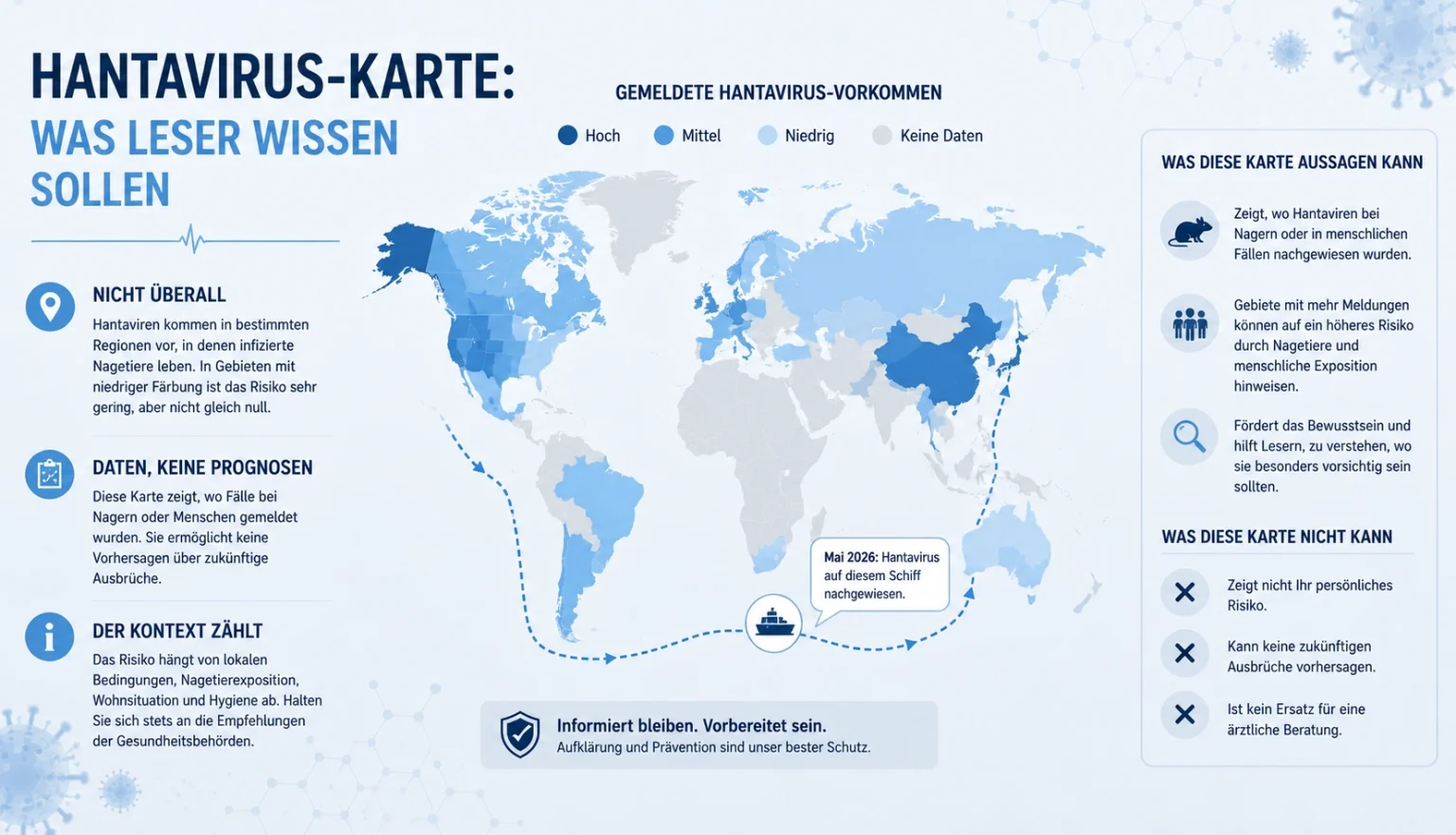
Eine Hantavirus-Karte kann helfen, regionale Muster zu verstehen. Sie zeigt aber nicht, ob eine einzelne Person infiziert ist. Karten können gemeldete Fälle, bekannte Verbreitungsgebiete oder Regionen mit bestimmten Nagetierarten darstellen.
Das persönliche Risiko hängt weniger von einer farbigen Fläche auf einer Karte ab, sondern von der konkreten Situation: Gab es Mäusekot? Wurde trocken gekehrt? War der Raum geschlossen? Gab es Staub? Sind danach Beschwerden aufgetreten?
Eine Karte ist nützlich für Orientierung. Die eigene Exposition entscheidet, ob man aufmerksam sein sollte.
Hantavirus: Wie lange krank?
Viele Leser fragen: Hantavirus wie lange krank? Eine pauschale Antwort gibt es nicht. Die Dauer hängt stark davon ab, welche Virusart beteiligt ist und wie schwer die Erkrankung verläuft.
Bei milderen Verläufen können Beschwerden nach einigen Tagen bis Wochen abklingen. Bei schwereren Verläufen, besonders mit Lungen- oder Nierenbeteiligung, kann die Genesung deutlich länger dauern. Manche Menschen brauchen nach einer ernsten Erkrankung zusätzliche Zeit, um wieder belastbar zu werden.
Wichtig ist, nicht nur auf die reine Krankheitsdauer zu schauen. Entscheidend ist, ob sich Symptome verschlechtern. Atemnot, Kreislaufprobleme, starke Schwäche oder weniger Urin sind keine normalen „Abwarten“-Symptome.
Ist Hantavirus tödlich?
Die Frage Hantavirus tödlich ist verständlich, aber sie braucht eine vorsichtige Antwort. Ja, bestimmte Hantavirus-Erkrankungen können lebensgefährlich sein. Das gilt besonders für schwere Lungenverläufe oder komplizierte Nierenverläufe.
Gleichzeitig ist nicht jede Exposition automatisch gefährlich und nicht jede Infektion endet schwer. Die Erkrankung ist selten. Das Risiko hängt von vielen Faktoren ab: Virusart, Gesundheitszustand, Zeitpunkt der Diagnose, Schwere der Symptome und medizinische Versorgung.
Die wichtigste Regel lautet: Wenn nach möglichem Nagetierkontakt Fieber und schwere Beschwerden auftreten, sollte man nicht zu lange warten. Frühe ärztliche Einschätzung kann den Unterschied machen.
Hantavirus Behandlung
Eine spezifische einfache Tablette gegen alle Hantaviren gibt es nicht. Die Hantavirus Behandlung ist meist unterstützend. Das bedeutet: Ärztinnen und Ärzte behandeln die Folgen der Infektion und stabilisieren den Körper, während das Immunsystem reagiert.
Je nach Schwere können nötig sein:
- Überwachung im Krankenhaus;
- Flüssigkeits- und Elektrolytkontrolle;
- Sauerstoffgabe;
- Medikamente zur Stabilisierung des Kreislaufs;
- Behandlung von Nierenproblemen;
- Dialyse bei schwerer Nierenbeteiligung;
- intensivmedizinische Betreuung;
- Beatmung bei schwerer Atemnot.
Versuchen Sie nicht, eine mögliche Hantavirus-Erkrankung zu Hause selbst zu behandeln, wenn Warnzeichen auftreten. Besonders Atemnot, Brustenge oder starke Verschlechterung gehören medizinisch abgeklärt.


Wann sollte man ärztliche Hilfe suchen?
Nicht jedes Unwohlsein nach dem Aufräumen einer Garage bedeutet automatisch Hantavirus. Trotzdem sollten Sie aufmerksam bleiben, wenn eine realistische Exposition möglich war.
Suchen Sie medizinische Hilfe, wenn Sie nach Kontakt mit Nagetierspuren folgende Beschwerden entwickeln:
- Fieber mit starker Schwäche;
- ausgeprägte Kopf-, Rücken- oder Muskelschmerzen;
- Übelkeit, Erbrechen oder Durchfall;
- Husten nach einigen Tagen Krankheitsgefühl;
- Atemnot oder Engegefühl in der Brust;
- Schwindel, Ohnmacht oder Verwirrtheit;
- deutlich weniger Urin;
- schnelle Verschlechterung des Allgemeinzustands.
Sagen Sie beim Arztbesuch direkt, dass Sie möglicherweise Kontakt mit Mäusekot, Staub oder Nistmaterial hatten. Diese Information ist wichtig.
Hantavirus-Test und Diagnose
Ein Hantavirus-Test wird nicht einfach zu Hause durchgeführt. Die Diagnose erfolgt über medizinische Untersuchung und Labortests. Ärztinnen und Ärzte berücksichtigen Symptome, mögliche Exposition, Reise- oder Aufenthaltsorte und den zeitlichen Zusammenhang.
Mögliche Untersuchungen sind Bluttests auf Antikörper, weitere Laborwerte zur Nierenfunktion, Entzündungswerte, Sauerstoffmessung oder bildgebende Verfahren, wenn Atemprobleme bestehen. Oft müssen auch andere Krankheiten ausgeschlossen werden, weil die frühen Beschwerden sehr ähnlich sein können.
Ein Test ist besonders dann relevant, wenn Beschwerden und Exposition zusammenpassen. Wer nach einer Risikosituation krank wird, sollte diese Verbindung klar ansprechen.
So reduzieren Sie Ihr Risiko
Vorbeugung ist der wichtigste Schutz. Es geht nicht darum, jede Naturumgebung zu meiden. Es geht darum, Nagetiere aus Wohn- und Arbeitsbereichen fernzuhalten und kontaminierte Bereiche richtig zu reinigen.
Praktische Schutzmaßnahmen:
- Ritzen, Löcher und Spalten an Türen, Wänden, Rohren und Fundamenten abdichten;
- Lebensmittel, Tierfutter und Samen in geschlossenen Behältern lagern;
- Müll gut verschließen;
- Unordnung in Kellern, Schuppen und Garagen reduzieren;
- geschlossene Räume vor dem Reinigen gut lüften;
- Mäusekot niemals trocken aufkehren;
- kontaminierte Stellen vor dem Wischen mit Desinfektionsmittel anfeuchten;
- Handschuhe tragen;
- bei starkem Befall professionelle Hilfe holen.
Die sicherste Reinigung ist langsam, feucht und kontrolliert. Die riskanteste Reinigung ist schnell, trocken und staubig.

Sicheres Reinigen nach Mäusespuren 🐀
Wenn Sie Mäusekot oder Nistmaterial finden, greifen Sie nicht sofort zum Besen. Öffnen Sie zuerst Fenster und Türen und verlassen Sie den Raum für eine Weile. Danach sollten betroffene Stellen mit Desinfektionsmittel angefeuchtet werden. Erst nach ausreichender Einwirkzeit wird das Material vorsichtig aufgenommen und entsorgt.
Nach der Reinigung sollten Flächen erneut desinfiziert, Handschuhe richtig ausgezogen und Hände gründlich gewaschen werden. Bei großflächigem Befall, vielen Kotspuren oder toten Nagetieren ist professionelle Reinigung sinnvoll.
Zusammenfassung
Das Hantavirus ist selten, aber ernst zu nehmen. Die größte Gefahr entsteht meist durch kontaminierten Staub aus Nagetierkot, Urin, Speichel oder Nistmaterial. Frühe Beschwerden ähneln oft einer Grippe oder einem Magen-Darm-Infekt. Kritisch wird es, wenn Atemnot, Brustdruck, starke Schwäche, Kreislaufprobleme oder Nierenzeichen hinzukommen.
Wer mögliche Exposition hatte und danach krank wird, sollte nicht raten, sondern medizinischen Rat einholen. Für alle anderen gilt: Räume lüften, nicht trocken kehren, desinfizieren, Nagetiere fernhalten und aufmerksam bleiben.
Hantavirus: Häufige Fragen
Kurze Antworten zu Symptomen, Inkubationszeit, Verlauf, Behandlung, Test und Schutz vor einer möglichen Infektion.
Was sind typische Hantavirus Symptome?
Typische Beschwerden sind Fieber, Schüttelfrost, Müdigkeit, Kopf- und Muskelschmerzen, Übelkeit, Erbrechen, Durchfall oder Bauchschmerzen. Später können Atemnot, Husten, Brustdruck oder Nierenprobleme auftreten.
Wie lange dauert die Hantavirus Inkubationszeit?
Die Inkubationszeit kann mehrere Tage bis einige Wochen betragen. Deshalb ist es wichtig, auch zurückliegende Kontakte mit Nagetierkot, Staub oder Nistmaterial beim Arzt zu erwähnen.
Wie sieht der Hantavirus Verlauf aus?
Der Verlauf beginnt oft mit unspezifischen Beschwerden wie Fieber und Schwäche. Danach kann sich die Erkrankung bessern oder in eine schwerere Phase mit Lungen-, Kreislauf- oder Nierenproblemen übergehen.
Hantavirus wie lange krank: Wie lange dauert die Genesung?
Das hängt vom Schweregrad ab. Mildere Verläufe können nach Tagen bis Wochen abklingen. Schwere Verläufe mit Krankenhausaufenthalt können deutlich länger dauern und eine längere Erholungsphase nach sich ziehen.
Ist Hantavirus tödlich?
Ja, schwere Formen können tödlich sein, besonders wenn Lunge oder Kreislauf stark betroffen sind. Trotzdem ist die Erkrankung selten. Entscheidend ist, bei Warnzeichen früh medizinische Hilfe zu suchen.
Gibt es eine Hantavirus Behandlung?
Die Behandlung ist meist unterstützend. Je nach Zustand können Sauerstoff, Flüssigkeitskontrolle, Kreislaufstabilisierung, Dialyse, Intensivüberwachung oder Beatmung nötig werden.
Sind Hanta virus symptome anders als Hantavirus Symptome?
Nein. „Hanta virus symptome“ ist meist nur eine andere Schreibweise in Suchanfragen. Gemeint sind die gleichen möglichen Beschwerden einer Hantavirus-Infektion.
Wann ist ein Hantavirus-Test sinnvoll?
Ein Test kann sinnvoll sein, wenn passende Symptome nach möglichem Kontakt mit Nagetierkot, Urin, Speichel oder Nistmaterial auftreten. Die Entscheidung trifft eine Ärztin oder ein Arzt.
Tragen alle Mäuse Hantavirus?
Nein, nicht alle Mäuse tragen Hantaviren. Da man infizierte Tiere aber nicht am Aussehen erkennt, sollten Kot, Nester und tote Nagetiere immer vorsichtig behandelt werden.
Wie kann ich mich vor einer Infektion schützen?
Halten Sie Nagetiere aus Wohn- und Lagerräumen fern, lagern Sie Lebensmittel sicher, lüften Sie geschlossene Räume vor dem Reinigen, kehren Sie Mäusekot nicht trocken auf und desinfizieren Sie betroffene Flächen vor dem Wischen.